

SANDUSKY — The Ohio Supreme Court has once again shot down defense efforts to disqualify Erie County Common Pleas Court Judge Beverly K. McGookey from presiding over the criminal fraud case against Ashli Ford.
In a decision authored by Chief Justice Sharon L. Kennedy, the high court dismissed a successive affidavit of disqualification filed by Ford’s attorney, Peter Pattakos, ruling that the filing improperly rehashed previously rejected arguments and violated procedural rules.
The decision clears the way for the criminal case (State of Ohio v. Ashli Ford) to move forward under Judge McGookey.
‘Impermissible rearguing’
Pattakos filed the successive affidavit on September 9 ahead of a scheduled trial date, marking his latest attempt to oust McGookey. He had previously filed affidavits in July and August seeking to disqualify McGookey as well as Judges Tygh M. Tone and Roger E. Binette. Those prior filings were denied as to McGookey and dismissed regarding Tone and Binette.
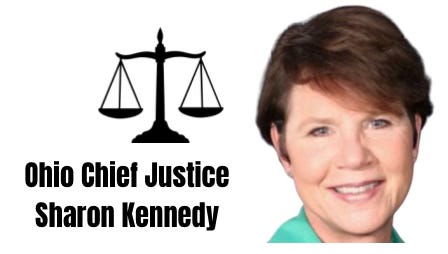
In the latest ruling, Chief Justice Kennedy noted that procedural rules strictly bar litigants from using subsequent affidavits to retry arguments that Supreme Court proceedings have already settled.
Specifically, the court noted Pattakos was rearguing claims that McGookey had improperly removed a juror in the underlying criminal case and had engaged in substantive ex parte communications with prosecutors—both of which were explicitly considered and rejected by the Supreme Court.

Procedural Rules Broken
The Supreme Court highlighted two core legal principles in striking down the filing:
No Rearguing: Affiants cannot circumvent rules against reconsidering or appealing disqualification decisions by dressing up old arguments under new filings.
No Unsanctioned Replies: Under Ohio Supreme Court Rules of Practice, litigants are prohibited from filing a “reply” to a judge’s response in a disqualification proceeding. Chief Justice Kennedy noted that Pattakos explicitly cited and quoted McGookey’s prior response to “ensure that the Court properly considers” his counterarguments, making the filing an improper, prohibited reply.
Because the filing consisted entirely of improper rearguments and forbidden replies to the judge’s past statements, Chief Justice Kennedy ordered the affidavit stricken and the proceeding dismissed.
Trial to Proceed
The ruling confirms that the underlying criminal case against Ford—who faces charges of mortgage fraud and perjury—will remain in Judge McGookey’s courtroom.
SUBSCRIBE TODAY


/30