SANDUSKY — Ashli Ford claims it’s her right to threaten office holders with whom she disagrees—she never intended any harm. Prosecutors call it witness tampering and say it’s too late for Ford to claim First Amendment protections.
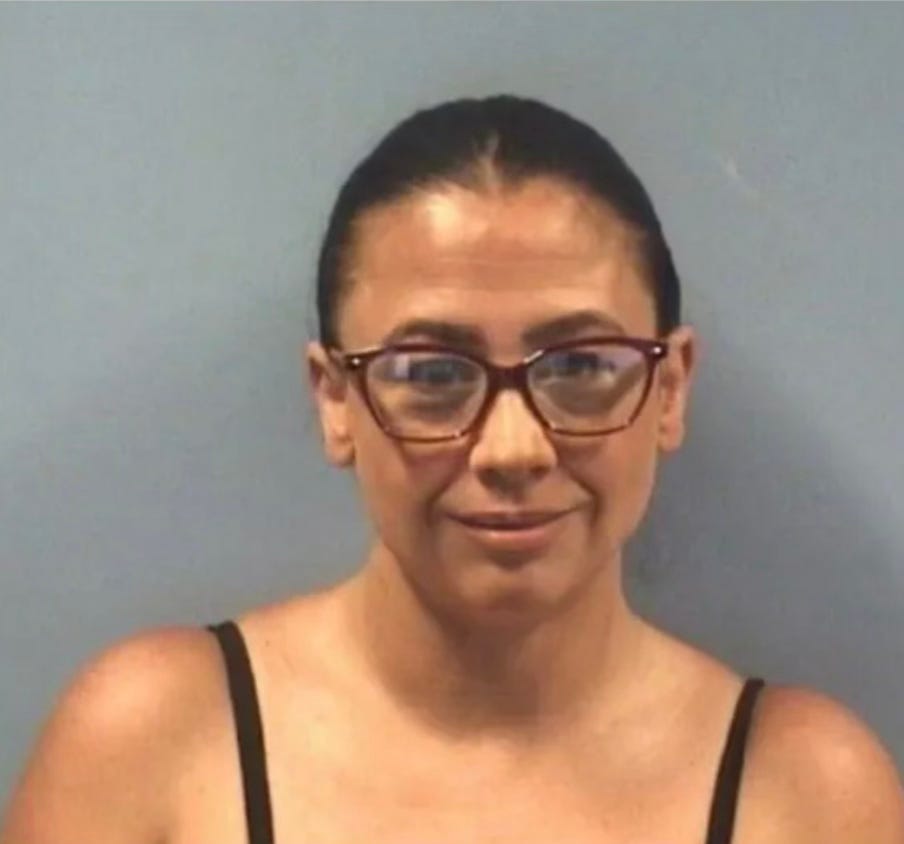
In a newly filed appellate brief obtained by StayTunedSandusky, the State of Ohio has formally responded to Ford’s attempt to overturn her 2025 felony intimidation convictions. The case, which centered on Ford’s aggressive social media tactics against Norwalk city officials, has now become a high-stakes constitutional showdown over where “caustic” political speech ends and criminal threats begin.
Is demising a word?
At the center of the dispute is a September 2023 Facebook post. In it, Ford targeted Norwalk’s Mayor, police chief, law director and safety director, stating she would “escort [them] to [their] demise in a manner more akin to Malcolm X than Martin Luther King Jr.”
Ford’s appellate team, led by Cleveland attorney Peter Pattakos, argues that this was “classic political hyperbole.” They contend that referencing Malcolm X is a statement of uncompromising tactics, and that “demise” in the world of politics refers to a loss of power or reputation—not a loss of life. Under the First Amendment, they argue, citizens have a right to be “vehement” and “unpleasantly sharp” when criticizing public servants.
Podcaster intimidator?
The Erie County Prosecutor’s Office sees a much darker picture. In their Feb. 23 filing, they point out that the four officials targeted were not just politicians—they were witnesses in an active criminal case against Ford at the time.
The State argues that context is everything. By invoking the “demise” of officials in the context of two assassinated civil rights leaders, prosecutors say Ford crossed the line into a “true threat” designed to intimidate witnesses into dropping their charges. To the State, this wasn’t a protest; it was a muscle move.
Trip-trap
The most technical—and perhaps most dangerous—part of the State’s argument is that it might be too late for Ford to even use the Constitution as a shield.
Prosecutors argue that because Ford’s original trial counsel failed to sufficiently raise these First Amendment arguments during her initial trial, she has effectively waived them on appeal. This forces Ford’s new team into a “double-or-nothing” bet: they must now prove that her first lawyer was so “ineffective” that the entire trial was fundamentally flawed.
Why it matters
As traditional local newsrooms “sundowning” news coverage, leaving a vacuum of information in Erie and Huron counties, the outcome of the Ford case will set new rules for the new digital frontier. It asks a question every resident should care about: Does the First Amendment protect a podcaster who uses her platform to go after the people tasked with testifying against her?
The Sixth District Court of Appeals will soon decide if Ford’s words were a protected exercise of liberty or a felony.
📰 Read more
Paid subscribers get 100% access to all our archives plus free open records assistance from our help line (419-357-5051). News coverage of Ashli Ford’s criminal cases is the most comprehensive news account of the podcaster’s claims.
/30


