Ashli Ford: Where the First Amendment ends and felony intimidation begins
NEWS/Analysis: This isn’t just a local squabble; it is a high-stakes constitutional collision
MILAN — The big questions three judges from Toledo will answer next month are whether a delusional person online can portray herself as a journalist, an advocate, and an investigator all rolled into one and lie about people in social media podcasts to generate an income for herself and satisfy a condition of her probation all at the same time.
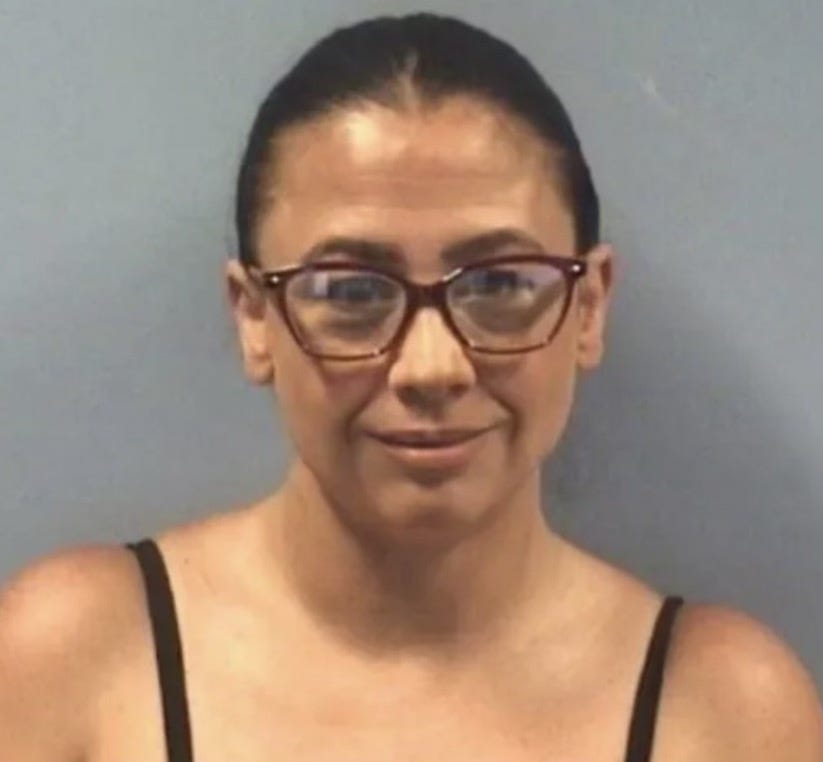
That’s the perspective on this one fine mess from this corner, at least.
Ford is appealing her May 2025 felony convictions on four counts of intimidation. Her defenders claim she is a victimized whistleblower, but the reality on the ground is far more predatory. For the families of Amanda Dean and Katelynn Shepard—Ford has been a never-ending intrusion into their lives, exploiting their tragedies of losing daughters in violent deaths.
For others, Ford has been a false witness, the kind the Bible condemns.
For all of her victims, and for prosecutors who convicted Ford last year after she used Facebook to threaten Norwalk city officials she wanted to influence, her “advocacy” looks less like journalism and more like a pay-to-play harassment scheme, where grief is the content and a Patreon subscription is the price of admission.
Names and faces
This isn’t just a local squabble; it is a high-stakes constitutional collision. The panel—composed of the institutional veteran Thomas J. Osowik, the criminal justice hard-liner Gene A. Zmuda, and the tech-savvy Charles E. Sulek—must decide where the First Amendment ends and felony intimidation begins.
Ford’s attorney argues that her online attacks are protected political speech. But the State is betting the court will see what should be obvious: that using a digital megaphone to systematically dismantle the reputations of witnesses and grieving mothers isn’t “reporting”—it’s a weapon.
The danger of this case lies in the precedent. If the court rules that Ford’s “Pay-to-Harass” model is protected speech, it effectively hands a blueprint to every online bully looking to monetize a grudge. It would mean that in Ohio, you can be a “journalist” simply by saying you are, even while you use that title to bypass the very laws meant to protect the public from stalking and intimidation.
Ford is a complete asshole — in my opinion — a boorish, delusional, gossipy menace. If you have the misfortune of meeting her, you might know all that instantaneously from her awkward demeanor. In front of a camera she doesn’t miss a beat self promoting. But when the camera is off she’s jittery, less confident. It becomes clear pretty quick that her need for attention outweighs everything in life and she’ll keep talking about herself until you agree with her, or walk away.
That was my experience, anyway.
But she’s not a dumb ass. She craves attention and she finds ways to get it. According to prosectors she does it by exploiting victims of crime and falsely accusing law enforcement and others to drive traffic to her social media, where she charges for access. She’s always looking for victims, it seems, to exploit for profit. It was embarrassing in 2024 and again last year how hard she tried sucking up to Cleveland broadcast news channels, that quickly saw through her facades of deceit.
Despite all that, her case is vital because it will define whether a “vacuum of truth” caused by the silence from officials remains a place where justice can prevail, or a playground for those who profit from its absence.
1. Judge Thomas J. Osowik: The Institutional Giant
Osowik is the “Dean” of this court. He’s been on the Sixth District bench for nearly 20 years and has served at every level of the Ohio judiciary.
The Reputation: He is known for a clinical, “fairness-first” approach. He recently served as a visiting judge on the Ohio Supreme Court, proving he’s respected far beyond Toledo.
The Edge: Osowik has seen every version of a “bad investigation” and every flavor of “harassment” in his career. He isn’t easily swayed by political noise or “activist” posturing. If there is a procedural hole in Ford’s case, he’ll find it; if she’s grasping at straws, he’ll snap them.
2. Judge Gene A. Zmuda: The Criminal Justice Architect
Zmuda isn’t just a judge; he’s a reformer who chairs the Civil Law Committee for the Ohio Judicial Conference.
The Reputation: Before the appellate bench, he was a Lucas County Common Pleas judge known for being incredibly tough on those who exploit others. In one notable case (State v. Sledge), he was sought for disqualification because he called a defendant a “vile human being” during sentencing. The Supreme Court backed him up.
The Edge: Zmuda has zero patience for people who use the legal system as a playground. He understands the nuance of “intimidation” better than anyone. He’s spent a decade looking at the “Manner and Cause” of crimes—he’s the last person you want to try and “spin” a story to.
3. Judge Charles E. Sulek: The New Guard
The youngest on the panel, Sulek brings a sharp, modern eye to the bench.
The Reputation: Sulek has been active in high-profile constitutional cases, including those involving Second Amendment rights and search warrants (In re Hirt).
The Edge: Sulek is tech-savvy and understands how digital communication—like podcasts and Facebook groups—is used to bypass traditional legal boundaries. He’ll be looking closely at the intersection of “Free Speech” and “Criminal Intimidation.” He knows that the First Amendment isn’t a “get out of jail free” card for stalking.
On a collision course
This panel is a “Nightmare Rotation” for someone whose defense relies on blurring the lines between journalism and harassment.
Osowik provides the history, Zmuda provides the grit, and Sulek provides the modern constitutional lens. When Ford’s attorney stands up for those 15 minutes, they aren’t just arguing against a conviction—they are arguing against a bench that has spent a combined 50+ years protecting the integrity of the court from exactly this kind of circus.
The Substack Angle: While Tricia Shepard sits at her kitchen table wondering why the Huron County Sheriff won’t help her, these three men will be sitting in Toledo deciding if the woman harassing her belongs in a newsroom or a prison cell.
April 1st isn’t just an oral argument. It’s a test of whether the “Sixth District” will allow the “Vacuum of Truth” to swallow the law entirely.
Bios (from news releases)
Judge Thomas J. Osowik was elected to the Sixth District Court of Appeals in November of 2006 and his current term expires on February 8, 2027. Prior to coming to the Court of Appeals, he was a trial judge for more than 15 years. He was appointed to the Toledo Municipal Court in January of 1991 by Governor Celeste and subsequently elected.
He continued to serve as a municipal court judge until elected to the Lucas County Court of Common Pleas in 2004. Judge Osowik is a life-long Toledo resident who received his BA in Political Science from the University of Toledo in 1977 and his JD degree from the University of Toledo College of Law in 1981.
He engaged in the private practice of law in Northwood, Ohio for over eight years before assuming the bench. While engaging in the private practice, Judge Osowik was also an Assistant Attorney General for the State of Ohio under Attorney General Anthony Celebrezze, Jr.
Judge Osowik was born in Toledo in 1955 and is married to Rosemarie and is the father of four sons.
*
Judge Charles E. Sulek was elected to the Sixth District Court of Appeals in November 2022. He previously worked as an Assistant Prosecuting Attorney in the Wood County Prosecutor’s Office, a Judicial Attorney at the Ohio Supreme Court for retired Justice Terrence O’Donnell, an Attorney Rules Analyst for the Ohio General Assembly’s Joint Committee on Agency Rule Review (JCARR), and in private practice as a litigation attorney.
Judge Sulek obtained a degree in political science from The Ohio State University and earned his law degree from Capital University Law School.
*
Judge Gene A. Zmuda was elected to the Sixth District Court of Appeals in November, 2018. Prior to the Court of Appeals, he served as a trial judge in Toledo Municipal Court from 2003-2006, and as a Common Pleas Judge for Lucas County, General Trial Division, from 2006-2018. He served as an at-large City Councilman for the City of Toledo from 1993-2003. Judge Zmuda practiced law for 18 years for various law firms, prior to becoming a judge.
Judge Zmuda has been an adjunct professor at the University of Toledo, in the Honor’s College, and the College of Law. He also has presented various continuing legal education programs in Ohio on behalf of the Ohio Judicial College, for which he is also a former Trustee. He currently serves as Chair of the Civil Law Committee for the Ohio Judicial Conference, and is a member of its Executive Committee. He has spoken nationally on issues concerning Lucas County criminal justice and pretrial reform efforts.
Judge Zmuda received his B.A., magna cum laude, from the University of Toledo in 1981, and his J.D. from the University of Toledo, College of Law in 1984. He is married to his wife Terri, and they have two sons.
📰 Read more
Paid subscribers get 100% access to all our archives plus free open records assistance from our help line (419-357-5051). News coverage of Ashli Ford’s criminal cases is the most comprehensive news account of the podcaster’s claims.
/30


