WATCH: Probationer-podcaster Ashli Ford under fire
Is what got her convicted now considered employment?
SANDUSKY — The Erie County probation department will have to decide if complaints made against probationer-podcaster Ashli Ford are enough to knock her off the air.
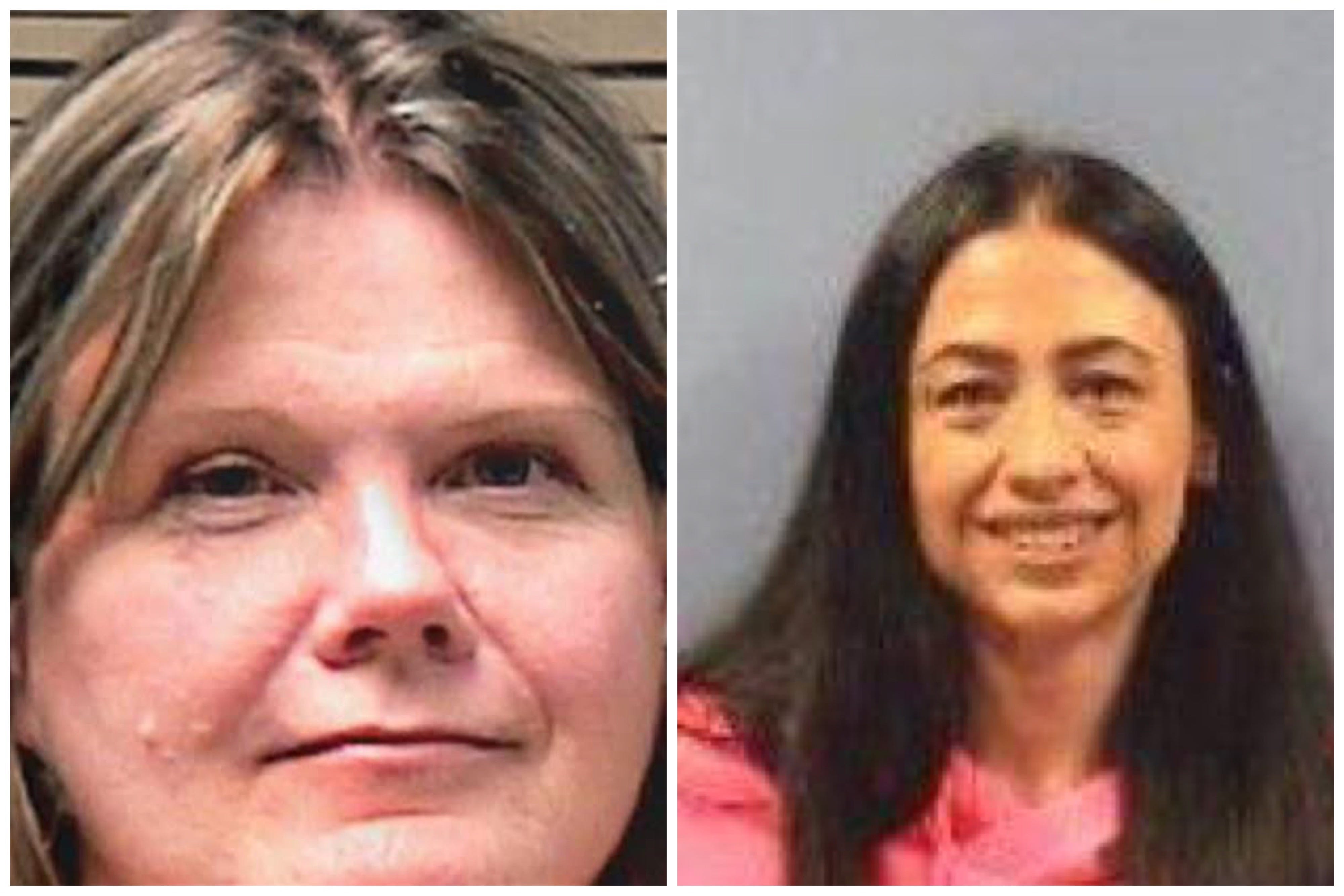
Chief probation Officer Kelli Bias acknowledged receiving three complaints recently alleging Ford is filing false police reports and encouraging her supporters to bring heat down on those Ford views as her enemies.
One of the recent complaints was from the mother of a 21-year-old woman who died in a suspicious one-vehicle crash and fire in 2018. The woman said Ford continues claiming at social media that she’s helping her family even though she’s repeatedly asked Ford to stop saying that.
‘He’s’ her No. 1 fan
“Jeff Logan,” a pseudonym used by a No. 1 fan of Ford’s, continues posting claims that Ford’s upcoming trial on forgery and mortgage fraud charges is “malicious,” and that Ford has “proven time and again, she’s got the goods” on Erie County Prosecutor Kevin Baxter.
Ford, through her attorney, filed a motion earlier this year asking Common Pleas Judge Beverly McGookey to remove Baxter as prosecutor from her upcoming trial, claiming that he was out to get her. Attorney Peter Pattakos appears to have been following a strategy used by Elsebeth Baumgartner years ago to claim malicious prosecution. McGookey tossed the motion, citing a lack of credible evidence in the claim.
Before hiring Pattakos Ford often referred to Baumgartner, who spent about six years in prison, as “the suit,” or the “legal department” that worked for her. Baumgartner, a disbarred attorney, was convicted in 2006 of intimidation and other charges similar to what Ford was convicted on in 2025. Like Ford, Baumgartner often makes claims that are demonstrably false and then fails to offer credible information to substantiate her claims.
WATCH In her own words: Ford blames ex-
More and same
In one of the complaints to Bias, a woman said Ford “continues to weaponize social media to harass and intimidate new victims.” The third complaint was filed by me, StayTunedSandusky.com reported previously. Ford filed criminal complaints against me falsely alleging harassment and then posting negative information about me with comments about the complaints she made. Her efforts are believed to be an attempt to diminish reporting about her legal cases.
The now-retired Huron police schools resource officer also was falsely accused by Ford, according to a police report and a school board investigator’s report.
Standard statewide guidelines for community control in Ohio—set forth by the Ohio Revised Code—mandate that a probationer must “work faithfully at suitable employment.” Specifically, conditions often require a probationer to maintain a full-time job (at least 30 hours per week) in a lawful occupation.
This raises a critical question for the Erie County Probation Department: Are they counting Ford’s podcasting as “suitable employment” that fulfills her court-ordered work requirement?
If her “work” consists of the same pattern of fabricating allegations and targeting public officials that led to her original felony intimidation convictions, it’s a dangerous precedent. In Ohio, a judge can restrict a probationer’s employment if it bears a “reasonably direct relationship” to the conduct that constituted the original offense. Given that her crimes were committed through her digital platform, allowing her to count that same platform as a “job” seems less like rehabilitation and more like a court-sanctioned return to the scene of the crime.
Whether the probation department views this as a “technical” violation or a substantive return to criminal behavior remains to be seen. But for those she targets, the line between “podcasting” and “felony intimidation” hasn’t just been blurred—it’s been erased.
Are probationer’s free speech rights restricted?
The short answer is yes, but not “automatically” in the sense that they vanish. They are restricted functionally and legally by the court’s sentencing order.
Contractual Waiver: When a defendant accepts probation (Community Control) instead of going to prison, they effectively sign a contract. In Ohio, this typically includes a waiver of certain Fourth Amendment rights (searches) and an agreement to “obey all laws” and “refrain from harassing conduct.”
The “Rehabilitative Interest”: Courts have the authority to limit a probationer’s speech if the restriction is reasonably related to their rehabilitation or the protection of the public.
The Content Rule: If a person’s crime was committed via social media (like Ford’s intimidation conviction), a judge can legally ban them from using social media or from mentioning specific victims/witnesses. This is not seen as an “abridgment of free speech” but as a “condition of supervision” to prevent recidivism.
📰 Read more
Paid subscribers get 100% access to all our archives plus free open records assistance from our help line (419-357-5051). News coverage of Ashli Ford’s criminal cases is the most comprehensive news account of the podcaster’s claims.
/30


Matt: I spoke with Kelli Bias today and she denies receiving the three complaints described in this and your earlier article. She stated there are no complaints.
Any comment?
Elsebeth Csizmadia Baumgartner
Waiting on Beth Czis’ expert analysis.