

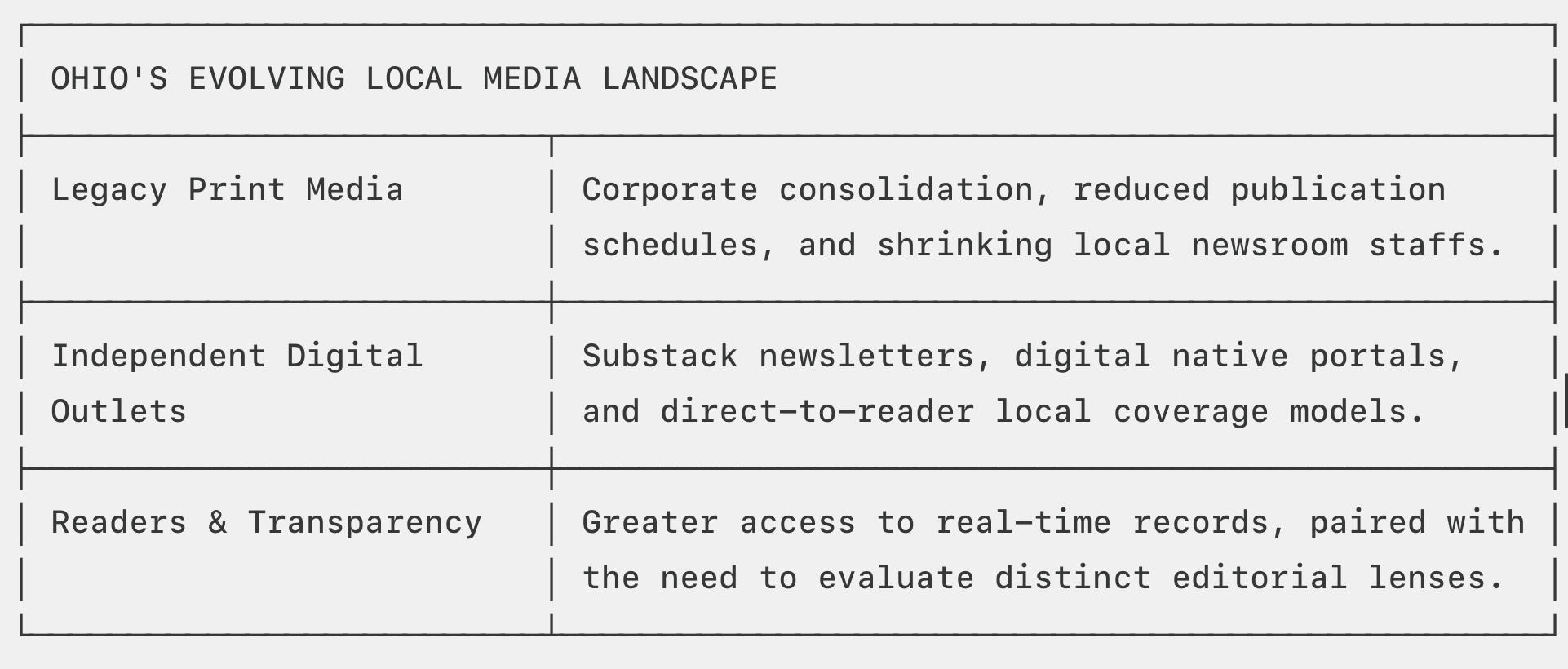
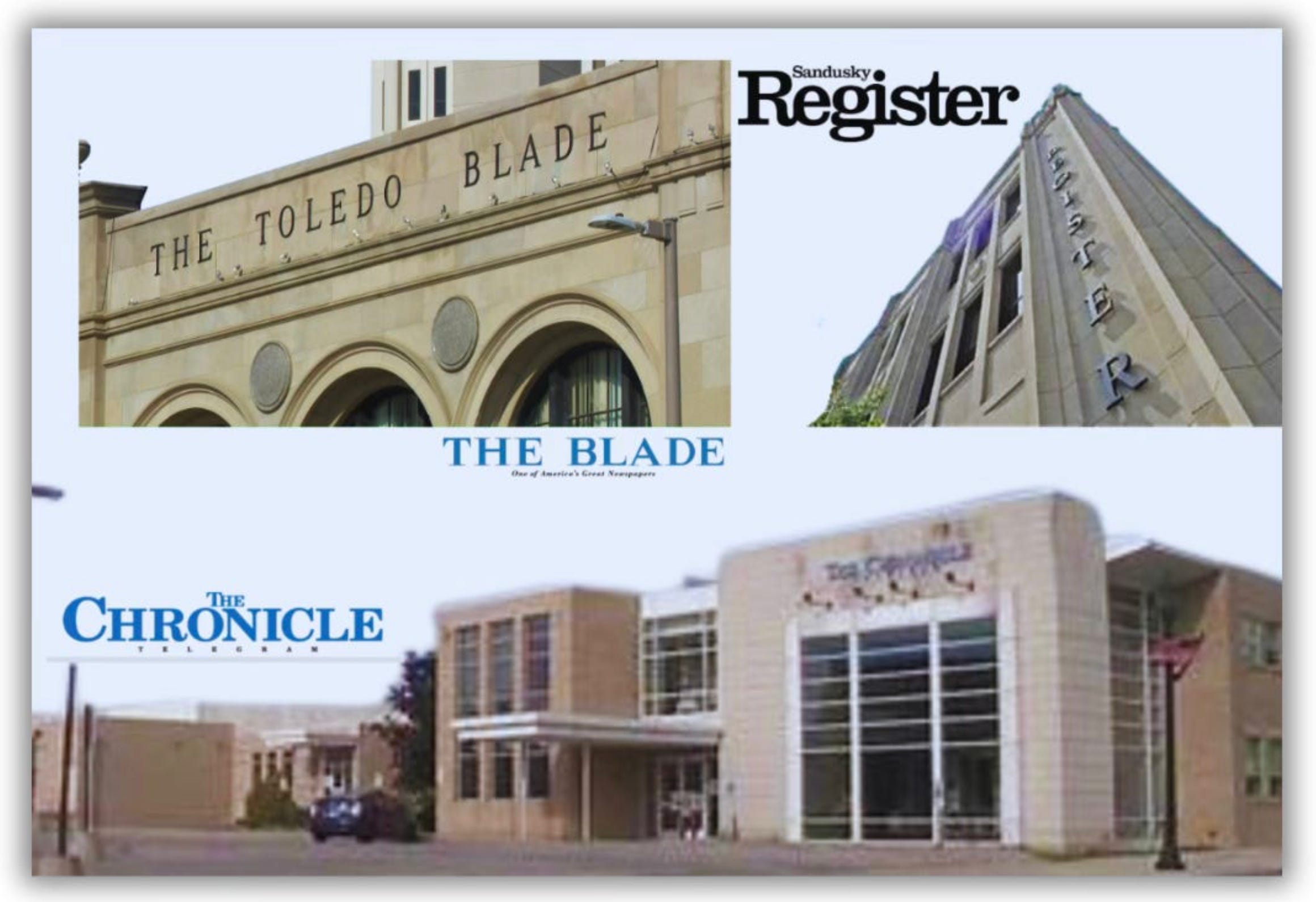
Across Ohio, the traditional local newspaper model is facing an existential decline. Decades of corporate consolidation, shrinking newsrooms, and falling print subscriptions have left dozens of communities in “news deserts”—towns without a dedicated reporter covering town hall meetings, school board decisions, or county court dockets.

In response to this vacuum, a new wave of digital-native, independent news outlets has emerged across the state. From hyperlocal platforms like Stay Tuned Sandusky and TiffinOhio.net to state-level non-profit newsrooms like the Ohio Capital Journal, these publications are redefining how Ohioans receive local reporting.
Operating without the overhead of print presses or corporate hedge fund owners, independent outlets rely on direct reader subscriptions, digital sponsorships, and direct access to public records to deliver immediate coverage.
Within this new media landscape, Stay Tuned Sandusky stands apart by adhering to a different philosophy: ruthless, independent accountability reporting without fear or favor. While corporate media often pulls its punches to protect advertising relationships or maintain access to public officials, Stay Tuned Sandusky operates as an uncompromised watchdog.
We don’t align with political parties, protect municipal insider networks, or care whose feathers get ruffled. Whether digging into municipal exit interviews revealing systemic workplace issues, holding county officials to the factual record, or questioning how taxpayer-funded youth centers are repurposed without public debate, the outlet’s loyalty lies entirely with the public’s right to know.
The rise of digital local media also highlights a timeless reality in journalism: media bias and editorial framing are as old as the press itself. While independent platforms like Stay Tuned Sandusky focus strictly on data journalism, public record drops, and factual contrasts, others operate with explicit partisan missions—ranging from progressive “pro-democracy” frameworks to conservative commentary pages.
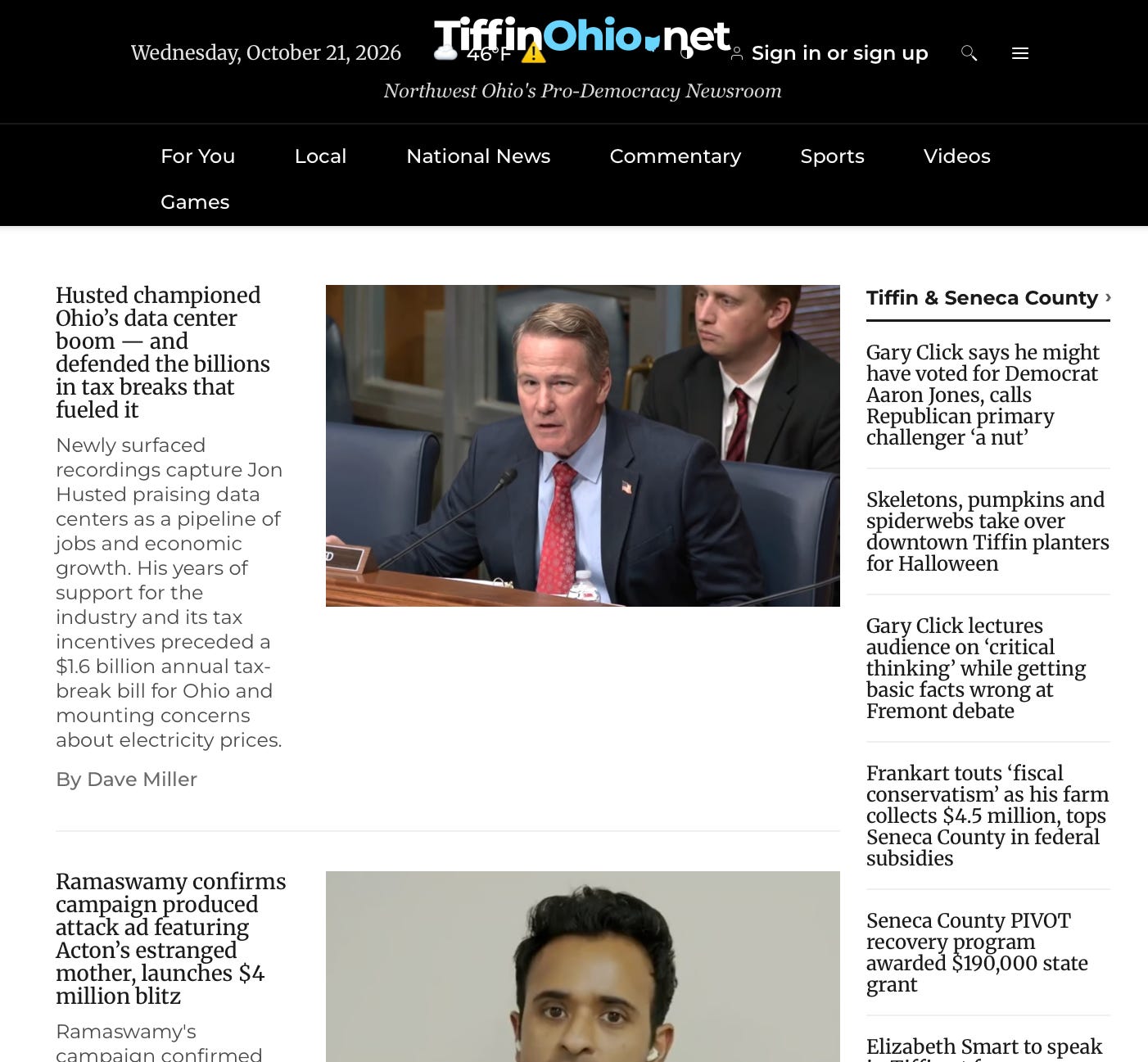
TiffinOhio.net is a “Democratic paper,” operated by an activist, according to one local pol. There’s nothing new about that. I’m convinced that U.S. Rep Jim Jordan not only invented the modern version of “fake news,” he’s the one who first started complaining that his political enemies were doing what he was doing: planting fake stories about Democrats to spread outrage.
Jordan’s staff would send outrageous news narratives back then—a lot of rhetoric about guns, God, and Godless Democrats—to upstart, going no where “digital news” outlets. Those outlets would “publish” what they sent and Jordan would cite those “news stories” as proof that he and those who agree with him were “real Americans,” and anyone who disagreed with him wasn’t.
Tiffin.net has been hammering Republicans in the lead up to the November Midterm election. The news outlet called out state Rep. Gary Click and does provide a steady stream of news coverage that looks pro-Democrats.
To many modern observers, this hyper-partisan tug-of-war feels like an unprecedented breakdown of objective journalism. But a longer view of American history reveals that the corporate “objective consensus” model of the late 20th century was actually the historical anomaly. What is happening in Ohio today is not a departure from American tradition—it is a return to our roots.
Long before corporate hedge funds owned daily broadsheets, early American media was openly partisan, deeply local, and driven by fierce ideological fights. During the Revolutionary Era, printer-activists used patriot broadsheets like the Boston Gazette to rail against King George III and royal governors, deliberately fanning the flames of rebellion. Crown loyalists retaliated through pro-monarchy printers like James Rivington, using their pages to defend the King and paint American revolutionaries as radical mobs. There was no pretense of neutrality; the press was an instrument of political warfare.
That tradition exploded during the Founding Era. The Federalist Papers were not published as neutral textbook essays; Alexander Hamilton, James Madison, and John Jay wrote them as an urgent, anonymous op-ed campaign in New York newspapers to convince voters to ratify the U.S. Constitution. Opponents quickly struck back with the Anti-Federalist Papers. By the 1790s, Thomas Jefferson and Alexander Hamilton were actively funding rival partisan broadsheets—Philip Freneau’s National Gazette and John Fenno’s Gazette of the United States—specifically to leak damaging narratives, accuse each other of treason, and rally their respective bases.
When upstart digital outlets publish partisan hits, or when political figures bypass legacy newsrooms to plant outrage narratives with friendly blogs, they are using modern fiber-optic cables to execute the exact same playbook early American partisans executed with hand-cranked wooden presses and ink balls.
As Ohio’s legacy papers vanish, the digital vacuum is being filled by a media ecosystem that looks remarkably like the 1790s: decentralized, fiercely opinionated, directly funded by partisans or passionate readers, and requiring citizens to read critically between the lines. The delivery system has changed, but the battlefield remains the same.


30